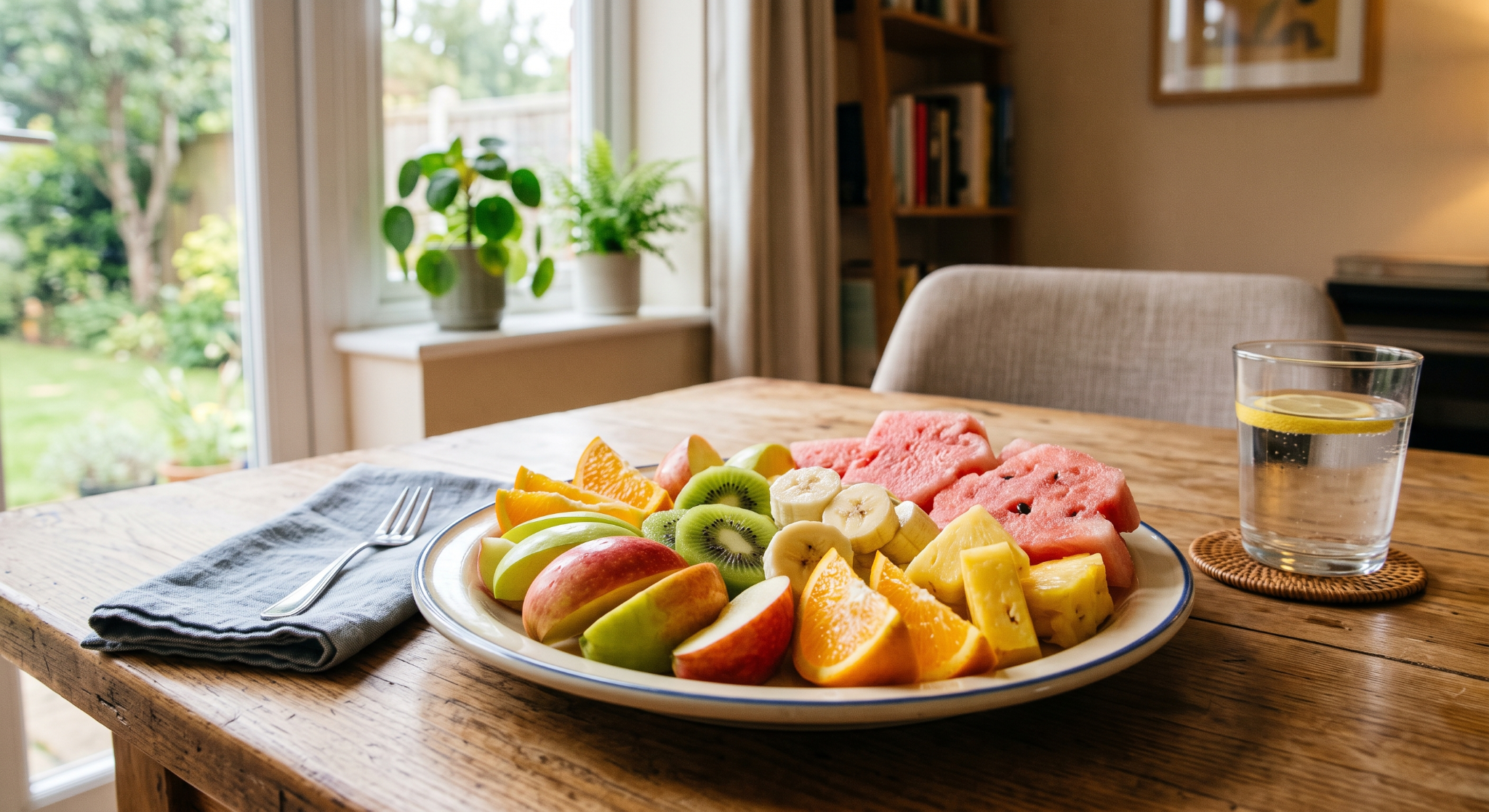
If you buy an apple from a UK supermarket today, someone might express concern about the sugar content. Fruit has received a bad rap, because social media often lumps bananas together with sugary soft drinks. The question “Are fruit sugars bad for you?” comes up again and again, and the honest answer is more reassuring than the headlines suggest.
According to the British Nutrition Foundation, UK adults consume 9% to 12.5% of their daily calories from added sugars, far above the recommended 5% for good health. Crucially, this excess sugar mainly comes from items like biscuits, cakes, sweets, and fizzy drinks, not from fruits.
Understanding the source of sugar matters because fear around fruit can discourage people from adopting a simple, healthy habit. In this guide, you’ll find what nutritionists want you to know about fruit sugars.
Why Eating Whole Fruit Impacts Digestion
Unlike free sugars, the natural sugars found in whole fruit are processed differently by our bodies. Packed with essential fibre, vitamins, minerals, and phytonutrients, whole fruit remains an indispensable pillar of a healthy, balanced diet.
When you eat a crunchy Bramley apple or even a sweet strawberry in the summer, the texture and juice naturally make you eat more slowly. This process of chewing and the water in the fruit slow down how fast the natural sugar (fructose) gets into your blood.
How Fruit Sugars Really Impact Blood Sugar
If you are wondering what fruits are bad for blood sugar, you might be pleased to learn that whole fruits rarely pose a risk for most individuals. For those without diabetes, the body naturally regulates mild, routine fluctuations in blood glucose caused by whole fruits or balanced smoothies seamlessly and safely.
Despite this reassurance, public health data shows that fruit intake remains remarkably low. A 2026 UK Government report found that only about 32.5% of adults in England ate at least five servings of fruit and vegetables daily four years ago. Consequently, most people would benefit from eating more fruit, not less.
Why Added Sugars Are the True Problem
Are fruit and veg sugars bad? Not in the way sweets and fizzy drinks are. The guidance from the NHS distinguishes between “free sugars” (those added to food, or naturally present in things like fruit juice and honey) and the sugars found naturally in whole fruits and vegetables. These natural sugars don’t count towards your daily limit. So, cutting out things like biscuits and sugary drinks will do you much more good than skipping an orange.
Easy Habits to Enjoy Fruit Every Day
Here are a few practical routines to help you include more fresh options in your diet:
Choose Whole Fruit Over Juice
It’s better to eat fruit whole than to drink it as juice or in a smoothie. This way, you get all the fibre, and it is more satisfying to chew. Eating a whole apple takes more time than drinking a glass of juice. This gives your body enough time to process the sugar as you eat.
Pair Fruit With Protein Or Fat
To slow digestion, you should eat a banana or grapes with nuts, seeds, or plain yoghurt. The protein and fat in these additions work with the fruit’s fibre. This helps your blood sugar rise more slowly and keeps you feeling full longer. For a visual representation, explore this guide showing how pairing whole fruits with healthy fats and proteins helps manage blood sugar levels.
Keep Fruit Within Easy Reach
Place a bowl of fresh fruit on your kitchen counter where you can easily see it. Avoid putting it away in a drawer or the fridge. When the fruit is in plain sight, you are more likely to grab and eat it. If you hide the fruit away, it may spoil and go to waste.
Understanding Fruit Sugars for Better Health
Fruit sugar and added sugar are fundamentally different, and treating them as the same is misleading. Whole fruits, which contain fibre, vitamins, and minerals, are a healthy and filling alternative for most people as part of a balanced diet. For personalised health advice, contact us at Sweet Decadence.