You pick up a pot of natural yoghurt, turn it over and see that it contains sugar. Next to it, a granola proudly says “no refined sugar” but lists honey as its second ingredient. No wonder the supermarket aisle feels confusing. The difference between added sugar and natural sugar is simpler than labels make it look, and this guide from Sweet Decadence breaks it down so you can stop fearing every gram.
What Is Natural Sugar?
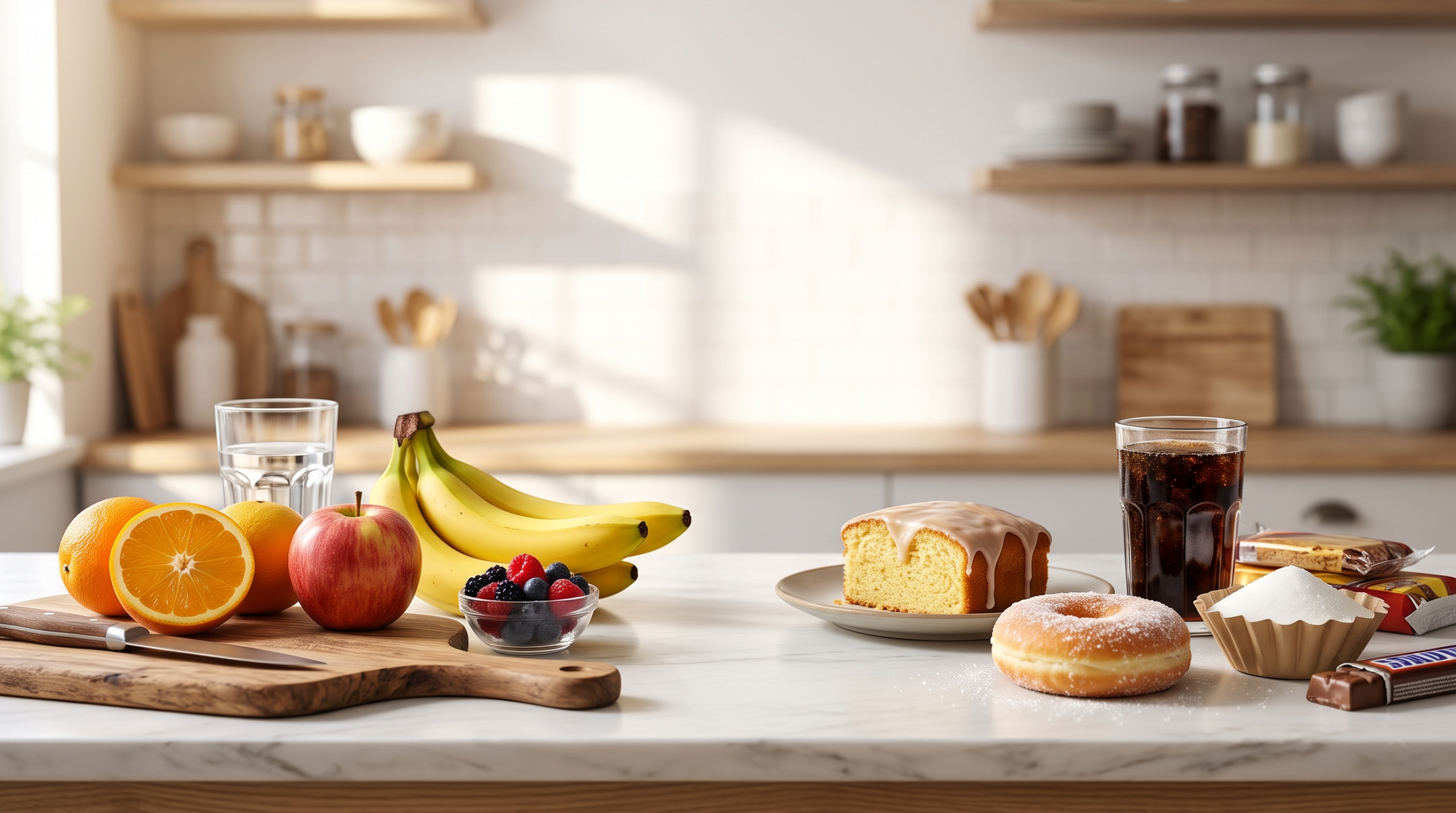
Natural sugars are the ones that occur naturally within a food. Lactose is the sugar found in milk and plain yoghurt, while fructose and glucose are found in whole fruit and some vegetables, such as carrots, sweet potatoes and peppers. These sugars come packaged with other nutrients. Fruit brings fibre, vitamins and water, and milk brings protein and calcium.
What Is Added Sugar?
Added sugar is any sugar put into a food or drink during cooking, manufacturing or at the table. This includes table sugar in tea, sugar in biscuits and cakes, and the sugar added to many sauces, cereals and ready meals. UK guidance uses the term “free sugars”, which the British Dietetic Association defines as sugars added by a manufacturer, cook or consumer, plus those naturally present in honey, syrups and unsweetened fruit juices. Sugars naturally present in milk, whole fruit and vegetables do not count as free sugars.
| Natural Sugar | Added (Free) Sugar | |
|---|---|---|
| Where it is found | Whole fruit, vegetables, milk and plain yoghurt | Sweets, biscuits, fizzy drinks, many sauces and cereals |
| Also includes | Fresh, frozen and dried whole fruit | Honey, syrups, fruit juice and smoothies |
| What comes with it | Fibre, vitamins, minerals, protein or water | Often little else nutritionally |
| Counts towards UK limit? | No | Yes |
Is Natural Sugar Better Than Added Sugar?
This is where many myths begin. According to the British Nutrition Foundation, individual sugar molecules may be chemically the same whether they are added or naturally present. The real difference lies in the food around them. Free sugars may have negative effects on health, while sugars found within whole fruit, vegetables and milk do not appear to have the same effect.
Think of an orange compared with a glass of orange juice. The whole fruit keeps its fibre, takes longer to eat and fills you up. Juicing removes most of that fibre and makes it easy to drink several oranges’ worth in seconds. That is why fruit juice counts as a free sugar, even when nothing has been added. There is more on this in the guide to whether fruit sugars are bad for you.
Why the Whole Food Matters
Looking at sugar on its own rarely tells the full story. A plain yoghurt and a fruit-flavoured one may both list sugar, but the plain version contains only lactose, while the flavoured one often has sugar added on top. A homemade tomato sauce gets its sweetness from tomatoes, while a jar might include added sugar to balance acidity. Many ultra-processed foods combine added sugar with refined starches and little fibre, which is why the overall food matters more than a single number.
How to Spot Added Sugar on Food Labels
The “of which sugars” figure on a nutrition label shows total sugars, both natural and added, so it cannot separate the two. The NHS suggests these guides per 100g:
- High: more than 22.5g of total sugars
- Low: 5g of total sugars or less
To find added sugar, check the ingredients list instead. Ingredients are listed in order of weight, so the higher sugar appears, the more there is. Look out for names such as:
- Cane sugar, brown sugar and molasses
- Honey, maple syrup and agave syrup
- Glucose, fructose, sucrose, dextrose and maltose
- Corn syrup and fruit juice concentrate
How Much Added Sugar Is Too Much?
The NHS advises that adults have no more than 30g of free sugars a day, around seven sugar cubes, and keep fruit juice and smoothies to 150ml a day. This is a limit for free sugars only. There is no need to cut down on the natural sugars in whole fruit, vegetables and milk, and there is no need to avoid sugar altogether. A slice of birthday cake or a spoonful of honey on your porridge can sit comfortably within a balanced diet.
Reading Beyond the Word “Sugar”
Seeing sugar on a label does not automatically make a food a poor choice, just as “no refined sugar” does not make it a healthy one. By checking the ingredients list, thinking about the whole food and keeping an eye on free sugars, you can shop with less confusion and enjoy sweetness without the guilt.