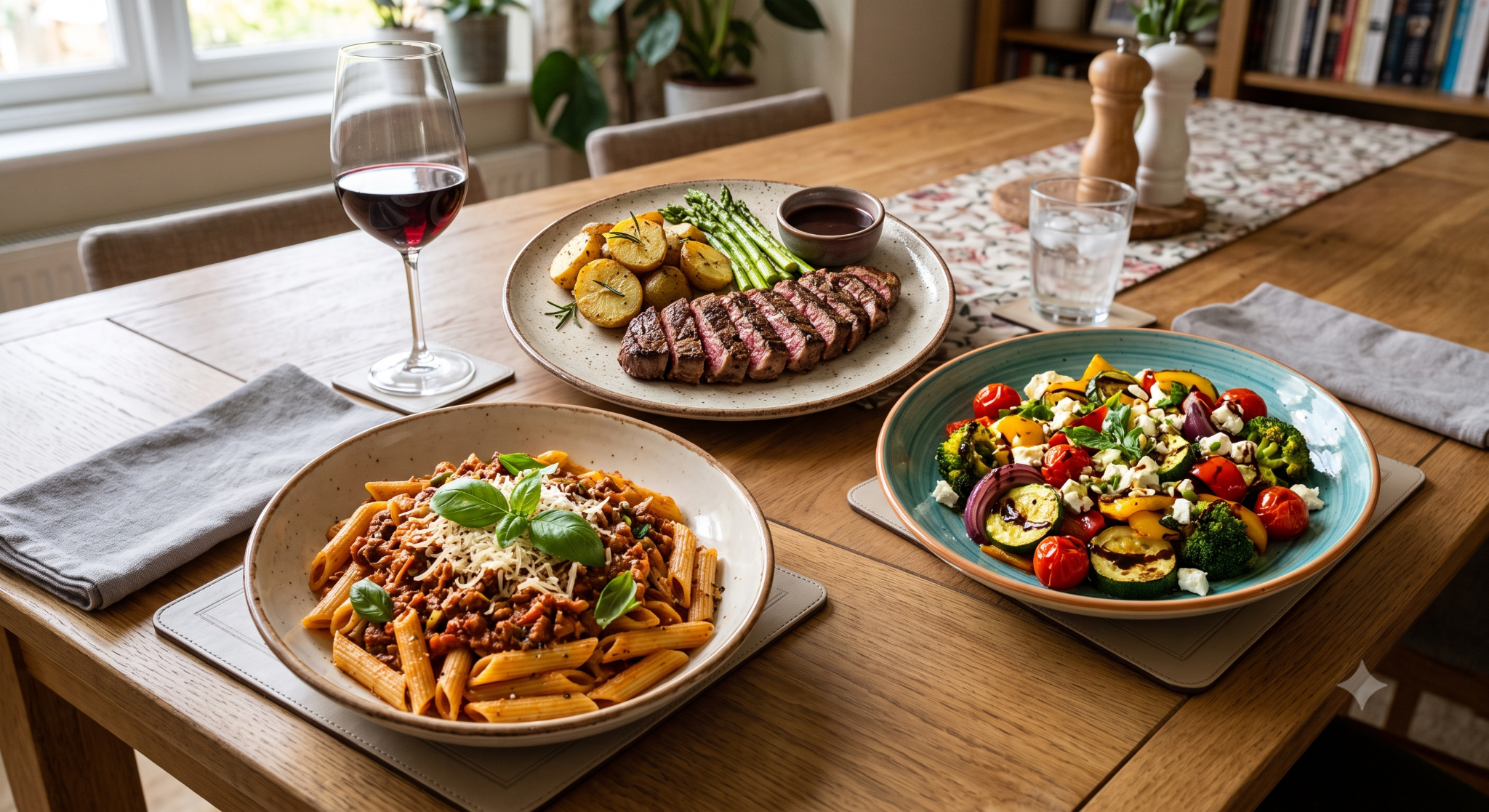
Sunday night, the fridge gets a full clear-out. Processed snacks binned, meal prep containers lined up, a new diet ready to start Monday morning. Three weeks later, half of it is forgotten and the leftover protein bars are gathering dust at the back of the cupboard. Most people have lived this cycle at least once, usually with carnivore, keto or Mediterranean promising to be the one that finally sticks. The real question isn’t which diet delivers results fastest; it’s which one you can actually keep doing once life gets in the way.
That question matters more than it might seem. According to the British Heart Foundation, only around 3 in 10 adults (27%) in the UK currently meet the 5 a day recommendation, so even the basic guidelines are a stretch for most people. Add in a genuinely restrictive diet and long-term consistency gets harder still, which is why sustainability, not speed, is the more useful lens for weighing up these three approaches.
What Each Approach Asks of You
Let’s look at the daily commitment involved in following each of these three diets.
Carnivore Diet
The Carnivore diet is a very strict eating plan. It allows only animal products, such as meat, fish, eggs, and some dairy. Fruits, vegetables, grains, and all other plant-based foods are excluded entirely, making it one of the most restrictive diets available.
Keto Diet
The Keto diet typically limits carbs to under 50 grams per day, relying on fat and protein for energy instead. Foods like bread, pasta, potatoes, and most fruits are off the menu, while eggs, fatty fish, cheese, avocado, and leafy greens are allowed.
Mediterranean Diet
The Mediterranean diet functions more like a flexible guide than a stringent plan. It focuses on olive oil, vegetables, beans, whole grains, nuts, and fish, with red meat enjoyed only occasionally.
How the Three Diets Compare
| Diet | Variety on the Plate | Weekly Cost | Eating Out with Others |
|---|---|---|---|
| Carnivore | Narrow, a handful of proteins | Highest, meat led shop | Difficult |
| Keto | Moderate, carbs capped daily | Middling, fats add up | Workable with planning |
| Mediterranean | Wide, nothing banned outright | Lowest, pulses and seasonal veg | Straightforward |
Where Sustainability Actually Gets Tested
Whether keto is a sustainable diet often comes down to your week rather than your willpower. Making salmon for dinner on a Tuesday night is pretty easy. A curry on Friday, a buffet at work, or a roast dinner at the pub with all the extras is a different story, though most people find a way to adapt rather than giving up on the diet entirely.
Carnivore asks something similar, just with less room to manoeuvre. Whether the carnivore diet is sustainable long term often becomes clearer a few weeks in, once the novelty of steak for every meal settles into routine, and eating out means explaining your choices to everyone at the table. For some people that trade-off is manageable. For others, it’s the main sticking point.
Mediterranean eating asks for its own kind of effort too, chopping vegetables after a long day isn’t always appealing. However, roasted peppers, olives, and warm bread usually feel like a treat rather than a chore, which tends to make the day-to-day effort feel a bit lighter than it does with the other two.
Why Nutrition Gaps Matter for Long-Term Sustainability
A diet’s sustainability isn’t only about willpower, it’s also about whether your body can keep running on it long term. When you stop eating whole food groups, you lose more than just calories. Things like fibre, vitamin C, and the plant compounds that feed your gut bacteria are mostly found in foods that the carnivore diet doesn’t include. The strict keto diet cuts out fruits, beans, and whole grains. As a result, some individuals experience constipation and low energy early on.
When people ask, “Is the Mediterranean diet sustainable?”, the answer looks much steadier, largely because nothing is forbidden. A 2026 National Library of Medicine (NLM) report found that people eating a Mediterranean pattern recorded around a 30% lower risk of heart attack, stroke or cardiovascular death. These long-term benefits show that consistency over time matters far more than short-term restriction.
How to Make Your Diet More Sustainable
What works for one person might not work for another. For example, someone with type 2 diabetes or epilepsy might do well on a keto diet under proper medical supervision, but if you love baking every weekend, you will probably hate the diet by February.
When looking at how to make your diet more sustainable, the honest answer starts with addition rather than subtraction to help you build lasting healthy routines. Try adding some spinach to your scrambled eggs. Use olive oil instead of butter on the toast. Keep canned sardines and frozen peas on hand for those evenings when you don’t feel like cooking.
What Makes It Past the Three-Week Mark
So, is the carnivore diet sustainable long term? For most people, not without a plan for the boredom and the social side of eating. Is keto a sustainable diet? It depends on the reason behind it, someone managing a medical condition under supervision might stick with it for years, while someone drawn in purely for weight loss often finds the restriction wears thin. Is the Mediterranean diet sustainable? Its flexibility gives it a natural head start over the other two, though sustainability still comes down to what fits an individual’s routine, not the diet itself.
The best diet is the one that fits your life for the long term. Strict diets offer fast results, but they often fail when routines change or tempting foods appear. Flexible plans, by contrast, adapt to real life much more easily. Want a one-on-one nutrition session? Get in touch with us at Sweet Decadence to create a dietary plan that works for your goals, finances, and the foods you enjoy.