

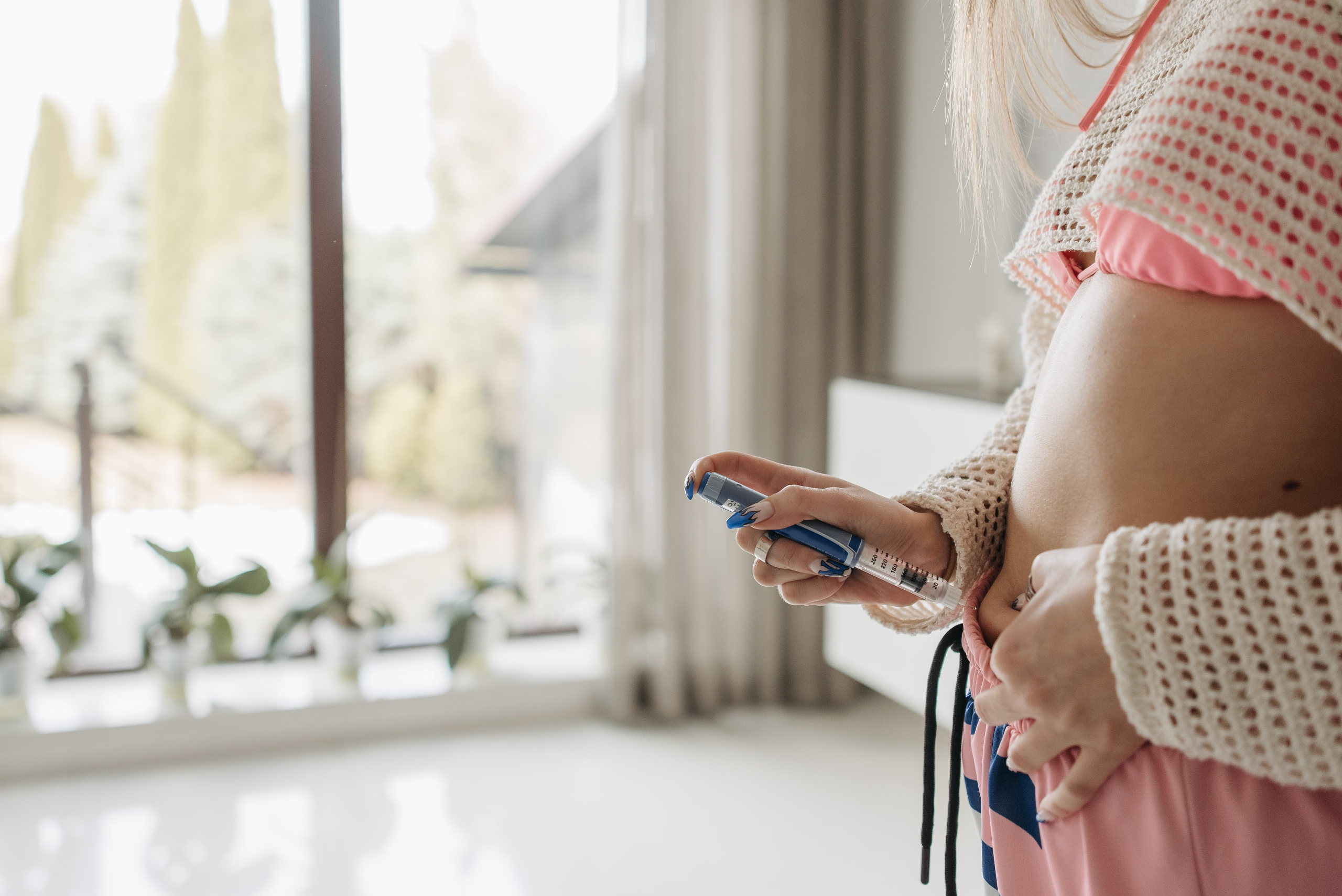
More clients walk into our London nutritional consultation already on a GLP-1 medication than at any point in the last few years. Some have been prescribed one through the NHS, some through a private clinic or online pharmacy, and almost all arrive with the same question: if the medication is doing the work, does what I eat still matter?
What Are GLP-1 Medications, and Why Have They Become So Prominent?
GLP-1 stands for glucagon-like peptide-1, a hormone produced naturally in the gut that helps regulate blood sugar and appetite. GLP-1 receptor agonists are medicines that mimic this hormone, and in the UK the main licensed options include semaglutide (sold as Ozempic and Wegovy) and tirzepatide (sold as Mounjaro), alongside older medicines such as liraglutide.
Ozempic and Mounjaro were originally developed and approved to help manage type 2 diabetes, while Wegovy is licensed specifically for weight management. In simple terms, this is how GLP-1 causes weight loss: the medicines slow gastric emptying, meaning food moves more gradually from the stomach into the intestines. This helps control blood sugar spikes after meals and increases feelings of fullness, so people naturally eat less. Tirzepatide goes a step further by also acting on GIP receptors, a second gut hormone involved in appetite and blood sugar regulation, which appears to amplify the effect (Westchester Medical Center Health Network).
Their rise in prominence isn’t hard to explain. Trial data has been striking: a study published in the New England Journal of Medicine found that people taking tirzepatide lost an average of 20.2 per cent of their body weight over 72 weeks, compared with 13.7 per cent for those taking semaglutide. In England, the NHS has recognised this potential at scale, with plans to roll Mounjaro out to around 220,000 people by the end of 2027 (BHF). It’s also worth noting that in the UK these are prescription-only medicines, licensed by the MHRA for specific conditions such as obesity or type 2 diabetes. The MHRA has not assessed their safety and effectiveness when used outside of this licensed use, for example, for weight loss in people who are not overweight or living with obesity (NHS guidance summary, Topsham Surgery). Anyone considering or currently using a GLP-1 medicine should be guided entirely by their GP or prescribing clinician, not by general information like this.
Demand has also grown faster than NHS capacity can currently absorb. A nationally representative survey by the Food Foundation, conducted in January 2026, found that nearly 7 per cent of the UK population had already used a GLP-1 medicine, with current research estimating that around 90 per cent of UK users are accessing them privately or off-label rather than through the NHS (Food Foundation). This is best understood as a simple mismatch between demand and NHS capacity rather than a judgement on how anyone chooses to access treatment. But it does mean that a large proportion of current users may not have the wraparound dietetic support that typically accompanies a structured NHS weight management pathway, which is exactly where accessible, evidence-based nutrition guidance has the most to offer no matter the route someone has taken to their medication.
Medication Changes Appetite, It Doesn’t Change Nutritional Need
It’s tempting to think that if a medicine reduces hunger, the question of what to eat becomes less important. The opposite is closer to the truth. GLP-1 medicines can reduce food intake substantially, which means every meal has to work harder nutritionally. When appetite shrinks but nutrient requirements don’t, gaps can appear quickly in energy, protein, fibre, vitamins and minerals, particularly if meals lean on convenience foods rather than nutrient-dense choices. This is one of the clearest ways in which medication and nutrition serve different, complementary roles rather than substituting for one another.
Important Nutrients Every Meal Needs
When appetite drops sharply, total intake falls, and unless you are paying attention the things that fall furthest are often the things you most need. Nutrient density becomes important.
- Protein: A meaningful share of any rapid weight loss comes from lean tissue, not just fat, and low protein intake makes that more likely. Anchoring each meal with something substantial (eggs, Greek yoghurt, fish, tofu, chicken, lentils) tends to work better than grazing, particularly alongside some resistance training.
- Fibre: Constipation is one of the most commonly reported side effects, and it is far worse when vegetables, pulses, oats and fruit have quietly dropped off the plate. Increases should be gradual rather than a sudden bowl of bran.
- Fluids: Thirst cues can get muddled when you are eating much less, and nausea makes people avoid drinking. Dehydration then makes the nausea, headaches and fatigue worse.
Micronutrients deserve a mention too. Iron, calcium, vitamin B12 and omega-3s are easy to under-eat on a small appetite, and women of reproductive age are already more likely to be short on iron. If you are trying to conceive, or might, that is a discussion to have with your GP before anything else, since these medicines are not used in pregnancy and advice on stopping beforehand is individual.
What Happens When You Stop a GLP-1?
This is the question people ask last and worry about most. The trial evidence is fairly blunt: appetite regulation largely returns to where it was, and a substantial proportion of the weight lost tends to come back over the following year or two when treatment stops without other support in place.
That is not a moral failing, and it is not evidence the medication did not work. It reflects the fact that obesity behaves like a chronic, relapsing condition, which is exactly why prescribers increasingly frame these treatments as long-term rather than a short course.
Medication drives much of the initial weight loss change, but the habits built alongside it around protein, fibre, portion awareness, physical activity, cooking with seasonal ingredients and eating patterns, are what a person continues to rely on regardless of what happens with their prescription in future. This is precisely why sustainable nutrition isn’t a “nice to have” running alongside treatment; it’s part of building resilience for whatever comes next, on or off medication.
The Bottom Line
GLP-1 medicines represent a genuine advance in the treatment of obesity and type 2 diabetes, backed by robust clinical evidence. But they work best not as a replacement for good nutrition, but as one part of a broader picture that includes what, and how well, a person eats. Adequate protein, sufficient fibre, good hydration and sustainable habits don’t compete with medication for credit, they’re the groundwork that supports a person’s health during treatment and beyond it, whatever the future holds.
This article is for general information only and is not a substitute for medical advice. If you are taking, or considering, a GLP-1 medication, always follow the guidance of your GP or prescribing healthcare professional.